Model year record
2026 Mazda CX-70 recalls & problems
The 2026 Mazda CX-70 has no safety recalls on file with NHTSA, and 4 owner complaints. The most-reported problem area is lane departure (2 complaints).
Safety recalls
No safety recalls have been filed for the 2026 Mazda CX-70.
Recall repairs are free at any authorised dealer. A recall listed here may already have been fixed on a particular car: enter its 17-character VIN at nhtsa.gov/recalls to see open recalls.
Crash test ratings
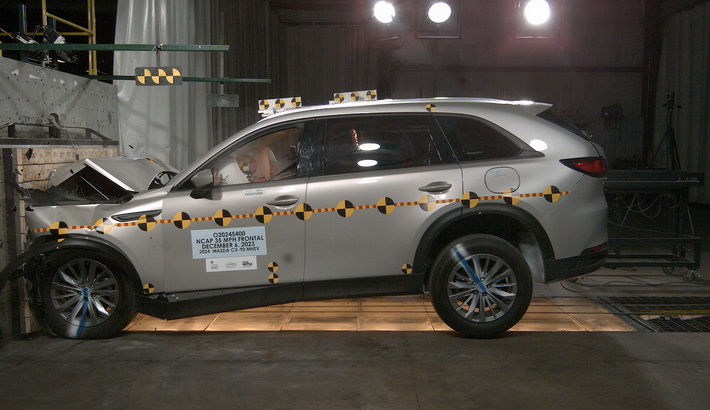
2026 MAZDA CX-70 SUV MHEV AWD
| Frontal crash | ★★★★★ |
|---|---|
| Side crash | Not Rated |
| Rollover | ★★★★★ |
| Rollover risk | 15.5% |
Forward collision warning: Standard · Lane departure warning: Standard
2026 MAZDA CX-70 SUV PHEV AWD
| Frontal crash | ★★★★★ |
|---|---|
| Side crash | ★★★★★ |
| Rollover | ★★★★★ |
| Rollover risk | 12.7% |
Forward collision warning: Standard · Lane departure warning: Standard


NHTSA 5-Star Safety Ratings (New Car Assessment Program). Ratings are comparable only between vehicles of similar size and weight, and ratings from 2011 on use tougher tests than earlier years. Photos: NHTSA.
Fuel economy
CX-70 SC 4WD Plug-in Hybrid
| City / highway | 25 / 28 mpg |
|---|---|
| Electric range | 32 mi |
| On electricity | 61 MPGe · 54 kWh/100 mi |
| Fuel | Premium Gasoline |
2.5 L · 4 cyl · Automatic (S8) · 4-Wheel Drive · about $3,150/year to fuel
CX-70 Hybrid Boost Low Power 4WD Hybrid
| City / highway | 24 / 28 mpg |
|---|---|
| Fuel | Regular Gasoline |
3.3 L · 6 cyl · Automatic (S8) · 4-Wheel Drive · about $2,700/year to fuel
CX-70 Hybrid Boost High Power 4WD Hybrid
| City / highway | 23 / 28 mpg |
|---|---|
| Fuel | Premium Gasoline |
3.3 L · 6 cyl · Automatic (S8) · 4-Wheel Drive · about $3,300/year to fuel
EPA estimates from fueleconomy.gov for each engine and transmission sold. Annual cost is the EPA's estimate for 15,000 miles a year at its current fuel and electricity price assumptions. Your results will vary.
What owners report
| Problem area | Complaints | Typical mileage* |
|---|---|---|
| Lane departureBlind spot detection | 2 | — |
| StructureBody | 1 | — |
| Engine | 1 | — |
| Fuel/propulsion system | 1 | — |
| Power train | 1 | — |
*Median odometer reading when the problem happened, where owners gave one. One complaint can name several problem areas.
Recent owner complaints
- Engine
The vehicle exhibits a severe, intermittent driving hazard, specifically engine stuttering, sluggishness, hesitation, and sudden power loss while actively operating on public roads at highway speeds. This malfunction creates an immediate safety risk of a rear-end collision by causing the vehicle to unexpectedly lose momentum in moving traffic. The manufacturerâs corporate escalation department subsequently acknowledged the potential safety risks and advised against operating the vehicle due to these unresolved mechanical issues. While an authorized dealership has now temporarily provided a standard loaner vehicle while in possession of the car, the service center stated they could not…
- Lane departure › Blind spot detection
Phantom Blind Spot Monitoring occurred while driving 70-73mph. Right driver side blind spot turns on for almost 5 minutes with no other vehicles around. Switching lanes causes lane departure warning system to activate.
- Lane departure › Blind spot detection
Blind Spot Monitor detecting phantom objects at highway speeds with no other vehicles around. Speeds between 69-75mph. Right Passenger side blind spot light turns for up to 20 seconds, turns off, then turns on again.
- Structure › Body
While driving, the panoramic sunroof suddenly exploded outward without any impact from road debris or another object. The glass shattered unexpectedly, creating a safety hazard from falling glass and the sudden loud noise. I believe the failure may have been caused by pressure inside the cabin or a defect in the sunroof glass or its installation. There were no visible signs that the vehicle struck anything before the glass shattered.
Owner complaints are submitted to NHTSA by the public and are not verified. Shown as filed (NHTSA removes personal details); long reports are shortened.