Problem: Hyundai Motor America (Hyundai) is recalling certain 2019-2020 Elantra, 2019-2021 Kona and Veloster vehicles equipped with 2.0L Nu MPI engines. The piston oil rings may not have been properly heat-treated, which could result in engine damage.
Risk: A damaged engine may stall, increasing the risk of a crash. In addition, oil may leak onto hot exhaust components, increasing the risk of a fire.
Fix: Dealers will inspect and, if necessary, replace the engine, free of charge. In addition, Hyundai will deploy Piston Ring Noise Sensing System (PNSS) software. Owner notification letters were mailed August 24, 2021. Owners may contact Hyundai customer service at 1-855-371-9460.
Recall repairs are free at any authorised dealer. A recall listed here may already have been fixed on a particular car: enter its 17-character VIN at nhtsa.gov/recalls to see open recalls.
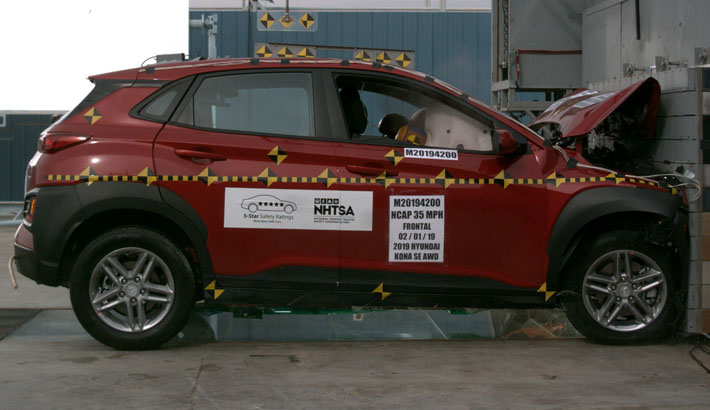
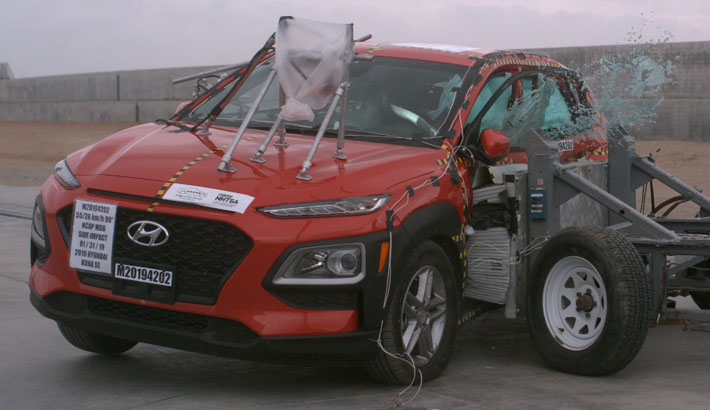
Crash test ratings
NHTSA side barrier crash testNHTSA side pole crash test
2021 Hyundai Kona SUV FWD
Overall
★★★★★
Frontal crash
★★★★★
Side crash
★★★★★
Rollover
★★★★★
Rollover risk
14.1%
Forward collision warning: Standard · Lane departure warning: Standard
2021 Hyundai Kona SUV AWD
Overall
★★★★★
Frontal crash
★★★★★
Side crash
★★★★★
Rollover
★★★★★
Rollover risk
13.6%
Forward collision warning: Standard · Lane departure warning: Standard
2021 Hyundai Kona EV SUV FWD
Overall
Not Rated
Frontal crash
Not Rated
Side crash
Not Rated
Rollover
Not Rated
Forward collision warning: Standard · Lane departure warning: Standard
NHTSA 5-Star Safety Ratings (New Car Assessment Program). Ratings are comparable only between vehicles of similar size and weight, and ratings from 2011 on use tougher tests than earlier years. Photos: NHTSA.
Fuel economy
Kona FWD
30mpg combined
City / highway
28 / 32 mpg
Fuel
Regular Gasoline
1.6 L · 4 cyl · Automatic (AM7) · Front-Wheel Drive · about $2,250/year to fuel
Kona FWD
30mpg combined
City / highway
27 / 33 mpg
Fuel
Regular Gasoline
2 L · 4 cyl · Automatic (S6) · Front-Wheel Drive · about $2,250/year to fuel
Kona AWD
27mpg combined
City / highway
26 / 29 mpg
Fuel
Regular Gasoline
1.6 L · 4 cyl · Automatic (AM7) · All-Wheel Drive · about $2,500/year to fuel
Kona AWD
27mpg combined
City / highway
25 / 30 mpg
Fuel
Regular Gasoline
2 L · 4 cyl · Automatic (S6) · All-Wheel Drive · about $2,500/year to fuel
EPA estimates from fueleconomy.gov for each engine and transmission sold. Annual cost is the EPA's estimate for 15,000 miles a year at its current fuel and electricity price assumptions. Your results will vary.
*Median odometer reading when the problem happened, where owners gave one. One complaint can name several problem areas.
Recent owner complaints
Oct 13, 2026Service brakes My 2021 Kona has undergone five separate oil consumption checks. The engine is depleting oil at an abnormal rate, creating a clear risk of sudden catastrophic engine failure and highway stalling. Dealership service personnel have repeatedly dismissed consumption data despite documented top-offs between 500 and 1,000 miles. Furthermore, this vehicle has already required an entire brake system replacement due to unidentifiable system failures, establishing a continuous history of substantial defects impairing its safety, market value, and use.
Jul 7, 2026Engine All 4 fuel injectors failed. They were replaced but the check engine light came back on. Crank shaft sensor was then replaced and now the check engine light is back on. Driving the car waiting for something to fail is not safe
Aug 13, 2026Engine My exact engine was as in a recall but not my car which failed prematurely at 84,000. I have taken extensive maintenance in the car in the for the past 2 years. Hyundai made me pay to tow my car to a dealership denied me for a goodwill replacement with the same exact problems as the same exact recalled engine and stuck me with the bill.
Sep 23, 2026Engine My 2021 Kona Limited 1.6L Turbo is consuming oil so rapidly that the Low Oil Pressure light has activated on the highway, creating a sudden risk of stalling and engine failure, that the dealership and Hyundai are declining service. According to research, when your oil pressure light flashes, your engine is moments away from locking up. If that happens at 65 mph on a highway, it is a catastrophic safety risk. I am the original owner of 2021 Kona Limited under warranty. The dealership refused to help me after my car lost oil, citing one missed service from over three years ago. That gap was due to a severe family medical emergency where my partner was hospitalized off and on for over three…
Sep 3, 2026Engine "The vehicle suffered sudden internal engine failure while in operation due to catastrophic oil starvation, presenting a severe risk of engine stalling and loss of propulsion on the road. Active diagnostic codes are P0014, P0017, and P0303. An independent mechanic confirmed the engine was found 3 quarts low on oil with absolutely no external leaks or pooling under the vehicle, indicating massive internal oil consumption. This vehicle has been meticulously maintained with 11 consecutive oil changes logged between 15,202 miles and 115,926 miles. This oil loss starved the hydraulic timing components of fluid pressure, causing immediate timing failure. The manufacturer's current safety recall…
May 1, 2026Engine At approximately 100,500 miles, the 2.0L Nu engine experienced a sudden, catastrophic internal failure while operating, causing a loss of power and stalling. Failed Component & Availability: The engine block assembly failed internally due to severe low compression (95 psi) across multiple cylinders and intake valve leakage. The original failed engine component was replaced and retained by the servicing dealership's service department during the long-block replacement. Safety Risk: The sudden loss of engine power and stalling occurred while navigating active traffic, creating an immediate crash hazard due to the loss of momentum and propulsion on a public roadway. Diagnosis & Confirmation:…
Aug 18, 2026Engine 2021 Hyundai Kona, VIN [XXX], 45,575 miles. Engine unexpectedly stalled while driving on 45 mph road and stopped at a light. Oil-pressure warning appeared when the engine stalled. Upon checking afterward, the oil level was below the measurable dipstick range with only droplets visible. Approximately 3.5 quarts were added. Vehicle restarted and was driven home. While idling at home, pressing the accelerator caused the engine to stall again. Vehicle had received an oil change at 39,073 miles and oil had also been checked and topped off approximately six months earlier. Cause has not yet been diagnosed. Hyundai VIN lookup currently shows no open or closed safety campaigns. INFORMATION REDACTED…
Mar 1, 2026 · 60,000 milesElectrical system › Horn The contact owns a 2021 Hyundai Kona. The contact stated that while driving at an undisclosed speed, the horn button was depressed but was inoperable. The dealer was contacted and notified of the failure. The contact was informed that the horn needed to be replaced. The vehicle was not repaired. The manufacturer was not notified of the failure. The failure mileage was approximately 60,000.
Owner complaints are submitted to NHTSA by the public and are not verified. Shown as filed (NHTSA removes personal details); long reports are shortened.
NHTSA defect investigations
DP22005 · opened Jan 27, 2023 · closed Aug 7, 2023 · led to recall 22V063000Pedestrian alert sounds NHTSA received a petition on or about July 18, 2022, requesting that Federal Motor Vehicle Safety Standard (FMVSS) 141 be applied to all electric and hybrid vehicles operating in the United States. The petition can be reviewed at NHTSA.gov under ODI Number 11486072. FMVSS 141 establishes performance requirements for pedestrian alert sounds for motor vehicles. The standard applies to hybrid and electric vehicles that have a gross vehicle weight rating of 4,536 KG or less or are defined as low-speed vehicles. The standard became fully applicable to all such vehicles manufactured on or after March 1, 2021.On January 27, 2023, NHTSA opened Defect Petition (DP) 22-005 to evaluate the subject matter described in the petition. On June 24, 2023 and as supplemented on June 25, 2023, the petitioner notified NHTSA he was withdrawing his petition. The petitioner indicated that, based on his review…