*Median odometer reading when the problem happened, where owners gave one. One complaint can name several problem areas.
Steering
The electronic steering gear (steering rack) on my 2021 Chevrolet Bolt has malfunctioned, causing the steering to feel rough, stiff, and sticky. Crucially, the steering wheel fails to naturally return to the center position after completing a turn, forcing me to manually pull the wheel back straight. This poses a severe safety hazard, as the vehicle will continue turning off the road or into oncoming traffic unless actively corrected, and the increased physical resistance makes precise lane adjustments difficult at highway speeds. There were no warning lights, error codes, or diagnostic messages on the dashboard prior to or during this failure, as the issue is strictly mechanical
Aug 26, 2026Electrical system
My 2021 Chevy Bolt keeps showing a battery or power-Propulsion warning light related to the high-voltage system. The warning keeps coming back even after multiple repairs. The first repair was on April 28, 2025, the second was on December 17, 2025, and it is scheduled again for another repair on March 3, 2026. The light is the same every time and affects the carâs performance and reliability. Iâm concerned this could be a safety issue involving the battery or propulsion system. The dealer repairs it temporarily, but the warning keeps returning, and the problem has never been fully resolved.
Apr 28, 2025Air bagsCrash1 injury
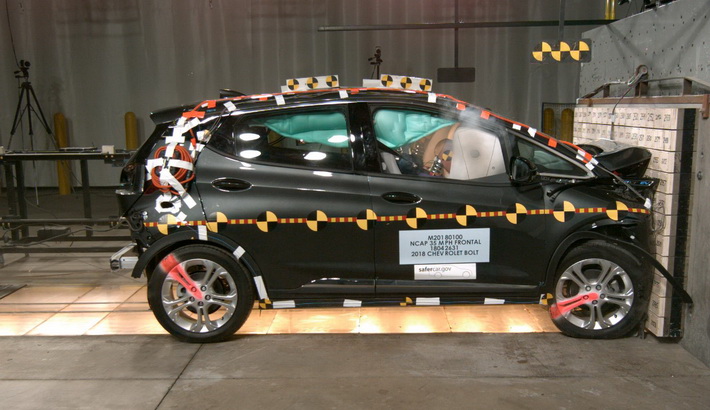
I was in a car accident on February 9th, in which my airbags did not deploy, however, I did receive an error in my Chevy app that my Air Bag system requires attention. I sustained facial injuries due to impact with the steering wheel. I believe the airbags should have deployed, but did not.
Feb 9, 2026Steering
Steering rack binding. Becoming progressively harder to turn over time. Steering wheel doesn't return to center. Clunking in front end occasionally heard when hitting bumps.
Jul 1, 2023Steering
The steering wheel will not return to center and feels like its binding on something, sometimes its tough to steer other times not. Does not feel safe. No warning lamps and nobody has inspected or worked on it yet.
Sep 9, 2025Steering
Steering gear is bound up due to a documented manufacturing error. Steering is increasingly stiff at speed, and will not return to center without significant driver input. This is a widespread issue that has been documented and causes a major safety concern to Chevy Bolt owners and should be addressed and repaired by the manufacturer.
Aug 19, 2025Steering
What component or system failed or malfunctioned, and is it available for inspection upon request? Steering rack. Steering wont return to center at 38,000 miles. How was your safety or the safety of others put at risk? Car handles unpredictably posing safety risk to others and myself. Has the problem been reproduced or confirmed by a dealer or independent service center? Yes. Quoted $2,700 to replace rack and pinion. I refused service as vehicle has less than 40k miles. Has the vehicle or component been inspected by the manufacturer, police, insurance representatives or others? No Were there any warning lamps, messages or other symptoms of the problem prior to the failure, and when did they…
May 21, 2025Vehicle speed controlCrash
Video available and was given to USAA insurance company. This 2021 GM Chevrolet Bolt EV Premier trim vehicle experienced a sudden uncommanded extreme acceleration when I selected "D" (drive) mode on the transmission selector after using "R" (reverse) to back out of a parking lot parking space. The vehicle, despite my stomping and holding the brake pedal down and repeatedly selecting a different mode on the transmission selector, could not be stopped and still wanted to accelerate. The vehicle traveled an estimated 250 feet through a parking lot, crossing a street, hitting the curbs at high speed and through a field. The vehicle stopped against some concrete debris in the field pushing in…
Apr 17, 2025
Owner complaints are submitted to NHTSA by the public and are not verified. Shown as filed (NHTSA removes personal details); long reports are shortened.