The 2017 Ford Explorer has 14 safety recalls and 1,704 owner complaints on file with NHTSA. The most-reported problem area is structure (661 complaints).
Recalls14safety recalls
Complaints1,704filed by owners
Crashes · fires34 · 11reported in complaints
Injuries · deaths51 · 0reported in complaints
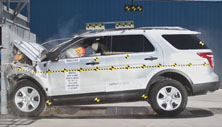
2017 Ford Explorer in an NHTSA crash test
Safety recalls
Structure › Body
NHTSA recall 26V448000 · Jul 14, 2026 · 288,314 vehicles · opened after NHTSA action (ODI)
Problem: Ford Motor Company (Ford) is recalling certain 2016-2019 Explorer vehicles. The roof rail covers may come loose and detach from the vehicle.
Risk: A detached roof rail cover can create a road hazard, increasing the risk of a crash.
Fix: Dealers will inspect the roof rail covers and as necessary, repair or replace the push-pins, rail clips, or roof rail covers, free of charge. Interim letters, notifying owners of the safety risk, were mailed August 28, 2026. Additional letters will be sent once the remedy is available, anticipated in January 2027. Owners may contact Ford customer service at 1-866-436-7332. Ford's number for this recall is 26S54. This recall expands previous NHTSA recall number 21V316. Vehicle Identification Numbers (VINs) involved in this recall became searchable on NHTSA.gov on July 16, 2026.
Suspension › Rear
NHTSA recall 26V101000 · Feb 20, 2026 · 412,774 vehicles · opened after NHTSA action (ODI)
Problem: Ford Motor Company (Ford) is recalling certain 2017-2019 Explorer vehicles. The rear suspension toe links may fracture.
Risk: A rear toe link fracture can result in a loss of steering control, increasing the risk of a crash.
Fix: Dealers will replace the toe links, free of charge. Owner notification letters were mailed on March 16, 2026. Owners may contact Ford Customer Service at 1-866-436-7332. Ford's number for this recall is 26S08. This recall is an expansion of previous NHTSA recall number 21V537. Vehicle Identification Numbers (VINs) involved in this recall will be searchable on NHTSA.gov beginning February 25, 2026.
Equipment › Electrical › Engine block heater
NHTSA recall 25V685000 · Oct 10, 2025 · 59,006 vehicles
Problem: Ford Motor Company (Ford) is recalling certain 2016-2019 Lincoln MKC, 2016-2023 Explorer, 2019-2020 Fusion, 2019-2024 Ranger, 2020-2022 Lincoln Corsair, Escape, 2021-2024 Bronco, Bronco Sport, and 2022-2024 Maverick vehicles. The engine block heater may crack and develop a coolant leak, causing it to short circuit when the block heater is plugged in.
Risk: An electrical short circuit can increase the risk of a fire.
Fix: Owners are advised not to plug in their block heater until the vehicle is remedied. Dealers will replace the block heater, free of charge. Owners will also have a alternative option to replace engine block heater element with a threaded blanking plug, and remove the block heater electrical cord. Interim letters, notifying owners of the safety risk, were mailed December 3, 2025. Additional letters will be sent once the final remedy is available, anticipated December 2026. Owners may contact Ford customer service at 1-866-436-7332. Ford's number for this recall is 25SA4. Vehicle Identification Numbers (VINs) involved in this recall became searchable on NHTSA.gov on October 15, 2025.
Structure › Body
NHTSA recall 25V347000 · May 23, 2025 · 492,145 vehicles · opened after NHTSA action (ODI)
Problem: Ford Motor Company (Ford) is recalling certain 2016-2017 Explorer vehicles. The driver and front passenger B-Pillar door trim may detach while driving.
Risk: Door trim that detaches while driving can create a road hazard, increasing the risk of a crash.
Fix: Dealers will repair the B-pillar trim, free of charge. Interim letters, notifying owners of the safety risk, were mailed June 5, 2025. A second notice will be sent once the final remedy is available, anticipated November 2026. Owners may contact Ford customer service at 1-866-436-7332. Ford's number for this recall is 25S53.
Structure › Body › Roof and pillars
NHTSA recall 24V031000 · Jan 19, 2024 · 1,889,110 vehicles · opened after NHTSA action (ODI)
Problem: Ford Motor Company (Ford) is recalling certain 2011-2019 Explorer vehicles. The A-pillar trim retention clips may not be properly engaged, allowing the trim to detach.
Risk: A detached trim piece can fall off the vehicle, becoming a road hazard and increasing the risk of a crash.
Fix: Dealers will inspect and replace the A-pillar trim as necessary, free of charge. This will be a phased campaign, with the remedy becoming available in different phases based on model years. Owner notification letters were mailed between July 18, 2024 and December 16, 2025. Owners may contact Ford customer service at 1-866-436-7332. Ford's number for this recall is 24S02.
Problem: Ford Motor Company (Ford) is recalling certain 2013-2017 Explorer vehicles originally sold, or ever registered, in Connecticut, Delaware, Illinois, Indiana, Iowa, Kentucky, Maine, Maryland, Massachusetts, Michigan, Minnesota, Missouri, New Hampshire, New Jersey, New York, Ohio, Pennsylvania, Rhode Island, Vermont, Virginia, West Virginia, Wisconsin, and the District of Columbia. Exposure to road salt can cause the cross-axis ball joint to corrode and seize, resulting in a fracture of the outboard section of the rear suspension toe link.
Risk: A rear toe-link fracture can result in a loss of steering control, increasing the risk of a crash.
Fix: Dealers will inspect and replace as necessary, the cross-axis ball joint (CABJ) knuckle, and replace the rear suspension toe links, free of charge. This recall is an expansion of previous NHTSA recall numbers 16V-245, 19V-435, and 20V-675. Certain vehicles previously repaired will need to return for the new remedy. An interim notification letter notifying owners of the safety risk were mailed on September 10, 2021. Owner notification letters were mailed on March 16, 2022. Owners may contact Ford's customer service at 1-866-436-7332. Ford's number for this recall is 21S32.
Structure › Body
NHTSA recall 21V316000 · May 5, 2021 · 616,967 vehicles
Problem: Ford Motor Company (Ford) is recalling certain 2016-2019 Explorer vehicles. The retention pins could loosen and allow the roof rail covers to detach from the vehicle.
Risk: A detached roof rail cover can create a road hazard, increasing the risk of a crash.
Fix: Dealers will install push-pins and replace any damaged rail clips and roof rail covers, as necessary, free of charge. The interim owner notification letter was mailed on June 22, 2021. Owner notification letters (remedy available) were mailed on October 1, 2021. Owners may contact Ford customer service at 1-866-436-7332. Ford's number for this recall is 21S22.
Suspension › Rear
NHTSA recall 20V675000 · Mar 12, 2021 · 454,941 vehicles
Problem: Ford Motor Company (Ford) is recalling certain 2013-2017 Explorer vehicles originally sold, or currently registered in Connecticut, Delaware, the District of Columbia, Illinois, Indiana, Iowa, Kentucky, Maine, Maryland, Massachusetts, Michigan, Minnesota, Missouri, New Hampshire, New Jersey, New York, Ohio, Pennsylvania, Rhode Island, Vermont, Virginia, West Virginia, and Wisconsin that were previously repaired under a prior recall numbers 16V-245 or 19V-435. The outboard section of a rear suspension toe link may fracture.
Risk: A rear toe link fracture can result in a loss of steering control, increasing the risk of a crash.
Fix: Ford will notify owners, and dealers will inspect the cross-axis ball joint (CABJ) knuckle attached to the rear suspension toe link and replace it as necessary, free of charge. The recall began November 27, 2020. Owners may contact Ford customer service at 1-866-436-7332. Ford's number for this recall is 20S62.
Problem: Ford Motor Company (Ford) is recalling certain 2017 Ford Explorer vehicles equipped with power front seats. The seat frames may have sharp edges.
Risk: Occupants my contact the sharp edges when reaching between the power front seat and center console, increasing their risk of injury.
Fix: Ford will notify owners, and dealers will install protective tape on the exposed inside edge and tab of the power seat frames, free of charge. The recall began November 8, 2019. Owners may contact Ford customer service at 1-866-436-7332. Ford's number for this recall is 19S29.
Suspension › Rear
NHTSA recall 19V435000 · Jun 10, 2019 · 1,194,173 vehicles
Problem: Ford Motor Company (Ford) is recalling certain 2011-2017 Explorer vehicles. The rear suspension toe links may fracture due to stress on the rear suspension.
Risk: A fractured rear toe link will cause a sudden change in vehicle handling and increase the risk of a crash.
Fix: Ford will notify owners, and dealers will replace the rear suspension toe links, and inspect both rear toe link ball joints, replacing the rear wheel knuckle(s), if necessary, free of charge. The recall began June 26, 2019. Owners may contact Ford customer service at 1-866-436-7332. Ford's number for this recall is 19S17.
Wheels › Hub
NHTSA recall 17E048000 · Aug 28, 2017 · 630 vehicles
Problem: Ford Motor Company (Ford) is recalling certain Wheel Hub Bearing assemblies, part number HB5Z-1104-C, incorrectly listed as being for installation on the rear axles of 2011-2017 Ford Explorer 4X2 vehicles. These bearings assemblies were manufactured without a self retention feature, possibly resulting in the separation of the wheel or wheel end.
Risk: A loss of the wheel or wheel end can increase the risk of a crash.
Fix: Ford will notify the distributors of the hubs specifying that they are to only be used on drive axles. It is believed that none of the hubs were purchased from Ford dealers for the incorrect application. Owners may contact Ford customer service at 1-866-436-7332.
Components: Wheels › Hub; Suspension › Rear
Steering
NHTSA recall 17V530000 · Aug 28, 2017 · 253 vehicles
Problem: Ford Motor Company (Ford) is recalling certain 2017 Explorer, Taurus and Police Interceptor Utility and Sedan vehicles. The steering gear heat shield fasteners may corrode, allowing the heat shield to detach.
Risk: If the heat shield detaches, the steering gear may overheat, increasing the steering effort required by the driver, especially at lower speeds, and increasing the risk of a crash.
Fix: Ford will notify owners, and dealers to inspect and replace the heat shield fasteners as needed, free of charge. The recall began on September 13, 2017. Owners may contact Ford customer service at 1-866-436-7332. Ford's number for this recall is 17S23.
Seats › Front assembly › Recliner
NHTSA recall 17V332000 · May 22, 2017 · 2,204 vehicles
Problem: Ford Motor Company (Ford) is recalling certain 2017 Ford Explorer, F-150, F-250, F-350, F-450 and F-550 vehicles equipped with a manual driver's seat back recliner mechanism. In the event of a crash, the seat back frame may not restrain the occupant due to having inadequate welds. As such, these vehicles may not meet the requirements of Federal Motor Vehicle Safety Standard (FMVSS) numbers 202a, "Head Restraints" and 207, "Seating Systems."
Risk: If the occupant is not adequately restrained in the event of a crash, they have an increased risk of injury.
Fix: Ford will notify owners, and dealers will inspect and, if necessary, replace the seat back frame, free of charge. The recall began on June 7, 2017. Owners may contact Ford at 1-866-436-7332. Ford's number for this recall is 17C08.
Components: Seats › Front assembly › Recliner; Seats
Engine and engine cooling › Engine › Gasoline › Turbo/supercharger
NHTSA recall 16V925000 · Dec 22, 2016 · 1,163 vehicles
Problem: Ford Motor Company (Ford) is recalling certain model year 2016 Ford Taurus, 2016-2017 Ford Flex, Lincoln MKT, 2017 Ford Explorer and Ford Explorer Police Interceptor Utility vehicles equipped with 3.5L GTDI engines. Improperly brazed turbocharger oil supply tubes may leak oil on engine components.
Risk: An oil leak, in the presence of an ignition source, increases the risk of a fire.
Fix: Ford will notify owners, and dealers will inspect, and if necessary, replace the turbocharger oil supply tubes, free of charge. The recall began on January 31, 2017. Owners may contact Ford customer service at 1-866-436-7332. Ford's number for this recall is 16S46.
Recall repairs are free at any authorised dealer. A recall listed here may already have been fixed on a particular car: enter its 17-character VIN at nhtsa.gov/recalls to see open recalls.
Crash test ratings
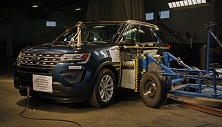
NHTSA side barrier crash testNHTSA side pole crash test
2017 Ford Explorer 4 DR SUV AWD
Overall
★★★★★
Frontal crash
★★★★★
Side crash
★★★★★
Rollover
★★★★★
Rollover risk
17.4%
Forward collision warning: Optional · Lane departure warning: Optional
2017 Ford Explorer 4 DR SUV FWD
Overall
★★★★★
Frontal crash
★★★★★
Side crash
★★★★★
Rollover
★★★★★
Rollover risk
16.4%
Forward collision warning: Optional · Lane departure warning: Optional
NHTSA 5-Star Safety Ratings (New Car Assessment Program). Ratings are comparable only between vehicles of similar size and weight, and ratings from 2011 on use tougher tests than earlier years. Photos: NHTSA.
Fuel economy
Explorer FWD
22mpg combined
City / highway
19 / 27 mpg
Fuel
Regular Gasoline
2.3 L · 4 cyl · Automatic (S6) · Front-Wheel Drive · about $3,050/year to fuel
Explorer AWD
21mpg combined
City / highway
18 / 25 mpg
Fuel
Regular Gasoline
2.3 L · 4 cyl · Automatic (S6) · All-Wheel Drive · about $3,200/year to fuel
Explorer FWD
20mpg combined
City / highway
17 / 24 mpg
Fuel
Regular Gasoline
3.5 L · 6 cyl · Automatic (S6) · Front-Wheel Drive · about $3,350/year to fuel
Explorer 2WD FFV FFV
20mpg combined
City / highway
17 / 24 mpg
Fuel
Regular Gasoline
3.5 L · 6 cyl · Automatic (S6) · Front-Wheel Drive · about $3,350/year to fuel
Explorer AWD
19mpg combined
City / highway
16 / 23 mpg
Fuel
Regular Gasoline
3.5 L · 6 cyl · Automatic (S6) · All-Wheel Drive · about $3,550/year to fuel
Explorer AWD FFV FFV
19mpg combined
City / highway
16 / 23 mpg
Fuel
Regular Gasoline
3.5 L · 6 cyl · Automatic (S6) · All-Wheel Drive · about $3,550/year to fuel
Explorer AWD
18mpg combined
City / highway
16 / 22 mpg
Fuel
Regular Gasoline
3.5 L · 6 cyl · Automatic (S6) · All-Wheel Drive · about $3,700/year to fuel
EPA estimates from fueleconomy.gov for each engine and transmission sold. Annual cost is the EPA's estimate for 15,000 miles a year at its current fuel and electricity price assumptions. Your results will vary.
What owners report
Problem area
Complaints
Crashes
Fires
Injuries
Typical mileage*
Structure Body; Body › Roof and pillars
661
7
2
7
76,000 mi
Unknown or other
373
4
2
15
5,750 mi
Engine
241
7
3
12
23,350 mi
Power train Automatic transmission › Torque converter; Automatic transmission
128
4
0
1
58,425 mi
Electrical system Instrument panel › Speedometer/odometer; Wiring › Fuses and circuit breakers
95
3
6
0
46,500 mi
Engine and engine cooling Exhaust system; Cooling system › Pump
Air bags Frontal › Driver clockspring/spiral cassette
34
9
0
11
45,000 mi
*Median odometer reading when the problem happened, where owners gave one. One complaint can name several problem areas.
Recent owner complaints
Jun 7, 2024Power train About 3 years and 3 months after a Power Control Module reflash was done in March 2021 under the Customer Satisfaction Program (CSP) 20B27, vehicle was brought to Ford dealership on 06/07/2024 with mileage at 79,730 for multi point inspection due to vehicle runs rough and hard time accelerating. Diagnostic code was P0316. Service tech recommendation was to replace engine for $14,000.00 including parts and labor (declined recommendation). Brought vehicle to another dealership but found no codes. Instead replaced engine motor mounts, sparkplugs, and air filter due to noticeable vibrations. Dealership service tech inspected engine but found no abnormal findings. Went to another Ford dealership…
Oct 17, 2026Power train Vehicle losses power randomly during acceleration, may not stay in park without parking brake on. Shudders badly and shifts harshly decelerates without warning. Nearly has caused collision when merging onto roadways due to lack of control of acceleration, have had to slow onto shoulder multiple times.
Jan 19, 2024Structure The contact owns a 2017 Ford Explorer. The contact received notifications of NHTSA Campaign Numbers: 24V031000 (Structure) and 25V347000 (Structure) however, the parts to complete the recall repairs were not yet available. The local dealer was contacted. The contact stated that the manufacturer had exceeded a reasonable amount of time for the recall repair. The manufacturer was made aware of the issue.
May 14, 2026Structure › Body B-Pillar trim on drivers side detached/broke in half and flew off in traffic. Since then, electrical panel on the driver door messed with the locks. locks no longer work, back tailgate ajar warning is on (even though the tailgate is closed) unable to open to open the tailgate (stuck in lock)
Oct 6, 2026 · 165,400 milesSuspension The contact owns a 2017 Ford Explorer. The contact stated that while the vehicle was parked, the passenger-side rear tire was low on air pressure. Upon inspecting the vehicle, the contact observed wires exposed on the inner tread of the tire. Additionally, the contact inspected the driver-side rear tire and observed exposed wires sticking out from the inner sidewall. The contact stated that NHTSA Campaign Number: 21V537000 (Suspension) was completed in October 2025. The contact associated the tire failure with the recall. The dealer was notified of the failure by phone. The manufacturer was notified of the failure. The failure mileage was approximately 165,400.
Aug 10, 2026Engine This is a second complaint for the same vehicle. Complaint number 11770400, filed today, understated the failure history, and I am filing this one so the complete record is in the database. Vehicle: 2017 Ford Explorer Platinum, 3.5L EcoBoost V6, VIN [XXX]. The first turbocharger failure occurred in 2023, at under 110,000 miles, and was repaired at a cost of approximately $2,900. A turbocharger was replaced again in August 2025 at a cost of $2,895. The catalytic converter was replaced in March 2026 at a cost of $1,700. The internal water pump, which sits inside the engine and is driven by the timing chain, was replaced in April 2026 at a cost of $2,350. On [XXX], at about 138,000 miles, the…
Aug 10, 2026Engine Both turbochargers on my 2017 Ford Explorer Platinum with the 3.5L EcoBoost V6 have failed. The first turbocharger failed and was replaced in 2025. On August 10, 2026, at about 138,000 miles, the second turbocharger failed: the vehicle lost power and poured thick white smoke from the exhaust as engine oil burned off, making it undrivable. Sudden power loss and heavy smoke while driving are serious safety hazards. This failure is consistent with the turbocharger oil supply tube defect in NHTSA recall 16V925000 for this same 3.5L EcoBoost engine, but my VIN falls outside that recall's range. I ask NHTSA to investigate turbocharger failures on 2016-2017 Ford Explorer Sport and Platinum models…
Oct 2, 2026Engine Sudden catastrophic engine failure due to coolant mixing. This resulted in a safety issue due to time and location of the event. From online consumer reports this event happens just after 100,000 miles to the 2017 Ford Explorer SUV's and is a KNOWN event that Ford has NOT disclosed. Regular maintenance can NOT prevent this event and stopping the use of the vehicle only helps if it is immediate and the problem known. That Ford hasn't disclosed this possibility of failure nor suggested preventative measures is a safety concern.
Owner complaints are submitted to NHTSA by the public and are not verified. Shown as filed (NHTSA removes personal details); long reports are shortened.
NHTSA defect investigations
PE23001 · opened Jan 27, 2023 · closed Feb 8, 2024 · led to recall 24V031Windshield trim molding Item detachment On January 27, 2023, the Office of Defects Investigation (ODI) opened PE23-001 to investigate allegations of A-pillar trim panel detachment on model year (MY) 2011-2019 Ford Explorer vehicles. At the time of opening, the office had received 164 Vehicle Owner Questionnaires (VOQs) reporting this failure. ODI has received 671 VOQs regarding this failure, including 1 alleged crash and 2 alleged injuries. Some consumers have reported that the failure occurred while they were driving at highway speeds, with the detached trim panel entering the path of travel of the vehicle behind them, requiring the driver of the following vehicle to take evasive action. It is noteworthy that motorists who experience this type of road hazard are less likely to accurately identify the subject vehicle the item detached from and report the event to the NHTSA. In its April 17, 2023 response to ODIâs…
EA17002 · opened Jul 27, 2017 · closed Jan 17, 2023Exhaust Odor in Passenger Cab During the EA17-002 investigation, the agency reviewed and analyzed reports of exhaust odors in the passenger cabins of Model Year 2011 to 2017 Ford Explorers. This investigation required an approach that incorporated knowledge and expertise from the automotive, medical, environmental health, and occupational safety fields. The agency conducted an in-depth investigation that encompassed the review of over 6,500 consumer complaints, conducting field inspections, and testing the relevant vehicles, both independently and in coordination with Ford and other entities. During the investigation, the evolution of Ford service bulletins intended to reduce the level of exhaust odors and carbon monoxide (CO) entering the occupant compartment was examined and independent tests to evaluate the effectiveness of the final Field Service Actions (FSA) for both consumer and police vehicles were…